
Ride-on Road Marking Machine FOR SALE
Ride-on Road Marking Machine for Large-Scale Road Marking Projects
Self-Propelled Line Marking Equipment for Highway, Airport and Large Pavement Applications
Wayke Machine provides ride-on road marking machine solutions for road construction contractors, pavement marking companies and infrastructure projects. With a seated operating position and powered driving system, ride-on equipment is designed for projects that require continuous machine movement, controlled marking operations and improved operator comfort. The suitable configuration depends on the marking material, application method and project requirements.
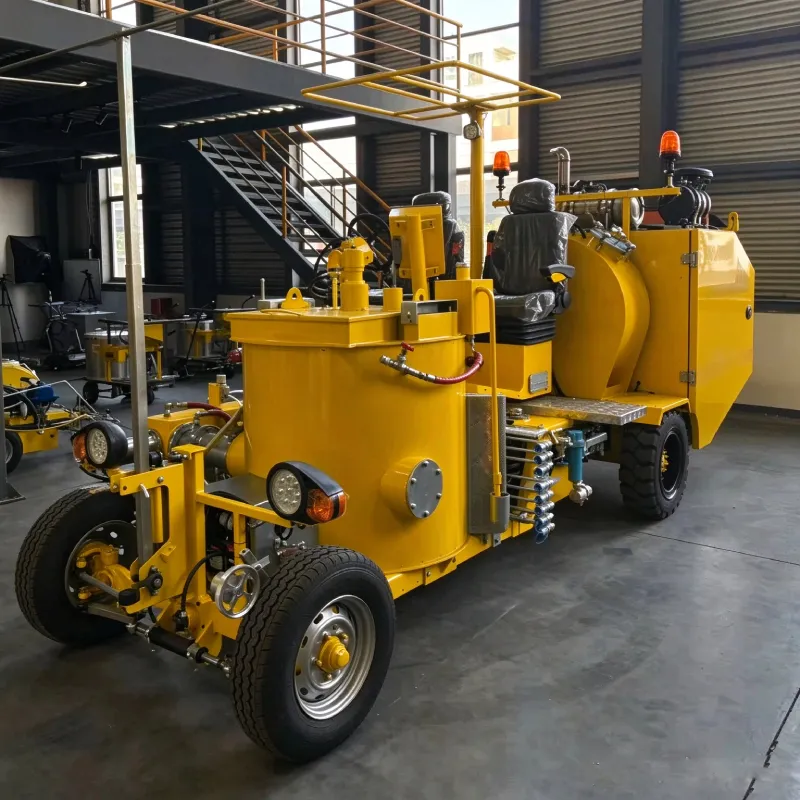
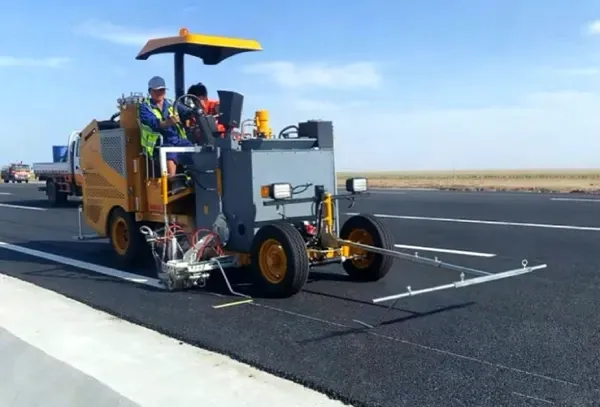
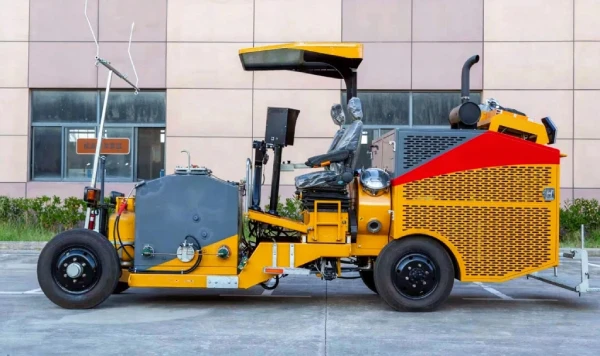
What Is a Ride-on Road Marking Machine?
A powered road marking machine that allows the operator to sit, drive and control marking operations.
A ride-on road marking machine is a self-propelled or powered marking vehicle with a seat for the operator. Instead of walking behind the equipment, the operator controls the machine from the driving position while the marking system applies lines to the pavement. Compared with smaller walk-behind equipment, ride-on machines are generally considered for larger projects, longer working distances and applications where operator comfort and machine movement are important.
Types of Ride-on Road Marking Machines
The marking material and application system are two important factors when selecting a ride-on machine.
Ride-on Thermoplastic Road Marking Machine
Designed for thermoplastic road marking applications. The machine configuration needs to match the material heating, supply and application arrangement. Glass bead dispensing can be included where required by the marking specification.
Explore Thermoplastic Configuration →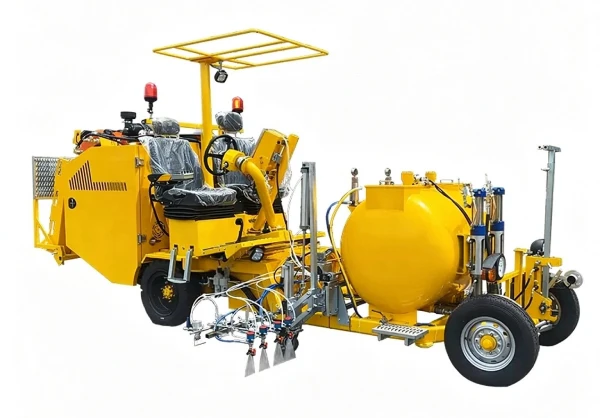
Ride-on Cold Paint Road Marking Machine
Used for liquid road marking paint applications. Depending on the model, the equipment may use an airless spray system or another compatible paint application arrangement.
Explore Cold Paint Configuration →
Ride-on Thermoplastic Spray System
A spray-based application arrangement for compatible thermoplastic materials. The application head, material supply and operating requirements differ from conventional screed or extrusion systems.
Ask About Spray Configuration →
Configuration note: Thermoplastic, cold paint and two-component systems
are not interchangeable simply by changing the material. Pumps, tanks, heating,
metering and application components must be compatible with the selected material.
Confirm the exact configuration available for the model you intend to purchase.
Machine Structure and Key Components
Check the actual machine configuration and main operating systems before choosing equipment.
Driving and Steering System
The driving system moves the machine during marking operations, while the steering arrangement helps the operator follow the required marking path.
- Engine or power source, according to model
- Mechanical, hydraulic or other drive arrangement
- Steering and braking configuration
- Operator seat and driving controls
Material Supply System
The material supply arrangement depends on the type of marking material and the machine's application method.
- Paint tank or compatible material container
- Material pump or feeding arrangement
- Heating system for applicable thermoplastic models
- Component metering system where required
Marking Application System
The application unit determines how the marking material is transferred and formed on the pavement.
- Spray gun or spray application head
- Screed box or extrusion application unit
- Line width and application adjustments
- Application controls according to model
Glass Bead and Operator Controls
Some road marking projects require glass bead application and additional control functions to meet project specifications.
- Glass bead dispenser where applicable
- Manual or synchronized bead application
- Operating panel and adjustment controls
- Maintenance and cleaning access
The components listed above describe common equipment systems, not a promise that every
ride-on model includes all of them. Use actual model photographs and specifications
to show the configuration being offered.
How Does a Ride-on Road Marking Machine Work?
The operating procedure varies according to the marking material and application system.
1
Prepare the Pavement
Clean and inspect the road surface. Confirm the marking layout, line dimensions and site conditions before operation.
2
Prepare the Material
Prepare thermoplastic, cold paint or other compatible material according to the material supplier's instructions.
3
Configure the Machine
Check the application head, material supply, marking width, operating controls and bead system where applicable.
4
Carry Out Marking
The operator drives the machine and controls the marking process according to the project layout and operating instructions.
Ride-on vs Walk-behind Road Marking Machine
Compare the operating methods and project suitability before selecting a machine.
| Comparison | Ride-on Road Marking Machine | Walk-behind Road Marking Machine |
|---|---|---|
| Operating Position | Operator sits on the machine | Operator walks behind or beside the machine |
| Machine Movement | Powered driving system, depending on model | Manual pushing or powered movement, depending on model |
| Typical Project Scale | Medium to large marking projects | Small to medium marking projects |
| Operator Comfort | Seated operating position | Walking operation |
| Working Environment | Longer routes and larger pavement areas, where suitable | Smaller areas and jobs requiring frequent maneuvering |
| Investment | Generally higher, depending on configuration | Generally lower, depending on configuration |
| Selection Priority | Project output, driving system and material capacity | Flexibility, maneuverability and purchase budget |
Actual productivity depends on line width, marking thickness, material supply, road layout, traffic control, operator experience and working conditions. The table is a general equipment comparison rather than a guaranteed performance comparison.
Why Choose a Ride-on Road Marking Machine?
A ride-on configuration can offer practical advantages for suitable pavement marking projects.
Powered Operation
A powered driving system helps move the machine during marking work and reduces reliance on manual pushing.
Seated Operation
The seated operating position can improve operator comfort during extended marking operations.
Controlled Movement
Driving and steering controls help the operator guide the equipment along the planned marking route.
Multiple Configurations
Different material supply and application systems can be selected according to the model and project requirements.
Applications of Ride-on Road Marking Machines
Ride-on equipment is considered for pavement marking projects with suitable road layouts and operating conditions.

Highway and Expressway Marking
Road marking operations for lane lines, edge lines and other pavement markings on highway and expressway projects.
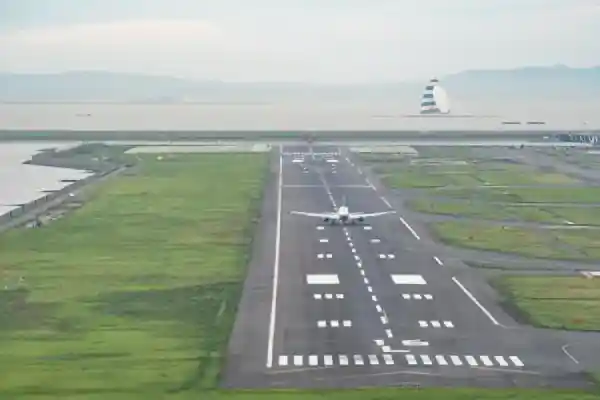
Airport Pavement Marking
Marking applications for airport runways, taxiways and apron areas. Machine selection must follow the airport project's technical requirements.

Urban Road and Road Maintenance
Re-marking and maintenance work on suitable urban roads, arterial roads and other paved surfaces.

Large Parking Areas
Pavement marking for commercial parking facilities, industrial sites and large paved areas.
How to Choose the Right Ride-on Road Marking Machine?
Start with your marking material and project conditions, then compare the machine's actual configuration.
1. Identify the Marking Material
Different materials require different storage, feeding and application systems.
- Thermoplastic: Check heating, material transfer and application arrangements.
- Cold paint: Check paint compatibility, pump type and spray equipment.
- Two-component: Check component storage, metering, mixing and application requirements.
2. Consider the Project Scale
The project layout and required work schedule influence the machine size and configuration.
- Length and area of pavement to be marked
- Required line width and marking design
- Continuous lines, broken lines or special patterns
- Available working time and traffic management conditions
3. Check the Main Machine Specifications
Compare the actual technical data rather than relying only on general product descriptions.
- Engine brand, power and drive arrangement
- Machine dimensions and operating weight
- Material tank or container capacity
- Application width and available adjustments
4. Confirm Site and Service Requirements
Consider the operating environment and long-term ownership requirements.
- Road surface and working environment
- Machine transportation and loading requirements
- Spare parts and maintenance access
- Operator training and technical support
Ride-on Road Marking Machine Specifications
The following table lists key parameters buyers should confirm for the selected machine model.
| Parameter | Specification to Confirm |
|---|---|
| Machine Type | Ride-on / Self-propelled configuration |
| Drive System | Confirm engine, power source and drive arrangement by model |
| Marking Material | Thermoplastic / Cold paint / Two-component, subject to available model |
| Application Method | Spray / Screed / Extrusion or other compatible application system |
| Marking Width | Confirm standard and adjustable widths for the selected application unit |
| Material Capacity | Confirm tank, container or material supply capacity by model |
| Glass Bead System | Optional or integrated system, depending on marking requirements |
| Machine Dimensions | Confirm overall length, width and height |
| Machine Weight | Confirm operating weight and transportation weight |
| Operating Controls | Confirm steering, speed control and marking control functions |
How Much Does a Ride-on Road Marking Machine Cost?
The price of a ride-on road marking machine depends on its material system, driving configuration, application equipment, machine capacity and optional functions. A model-specific quotation is more useful than a general price estimate.
Thermoplastic Configuration
Cost is affected by the heating arrangement, material feeding system, application unit and glass bead equipment where required.
Cold Paint Configuration
Cost depends on the paint supply system, pump arrangement, spray equipment, tank capacity and control functions.
Two-Component Configuration
Cost is influenced by component containers, metering equipment, mixing or application system and material compatibility.
Key Factors Affecting Machine Cost
Drive and Power System
Engine brand, power output, drive arrangement and steering configuration.
Material Supply System
Tank capacity, heating arrangement, pumps and material feeding equipment.
Application Equipment
Spray guns, screed boxes, extrusion heads and other application components.
Automation and Controls
Operating controls, automatic functions and optional control systems.
Additional Accessories
Glass bead systems, spare parts, tools and other project-specific accessories.
Export and Delivery
Packaging, destination, shipping method and delivery arrangements.
Frequently Asked Questions
Common questions about ride-on road marking machine selection and applications.
1. What is a ride-on road marking machine?
A ride-on road marking machine is a powered road marking machine that allows
an operator to sit on the equipment and control its movement during marking
operations. It is generally considered for larger pavement marking projects
where operator comfort, machine control and working efficiency are important.
2. What is the difference between ride-on and walk-behind road marking machines?
A ride-on road marking machine allows the operator to sit and drive the equipment,
while a walk-behind machine is guided by an operator walking behind it.
The appropriate option depends on project size, working conditions, budget,
marking system and required maneuverability.
3. What types of marking materials can ride-on machines apply?
Ride-on road marking equipment can be configured for different marking materials,
such as thermoplastic, cold-applied paint and certain two-component systems.
Each material requires a compatible supply and application system.
Confirm the available configuration with the equipment supplier.
4. Can a ride-on road marking machine be used for highway projects?
Ride-on road marking machines may be suitable for highway and expressway projects,
depending on the marking material, required line design, application system,
project output and site conditions.
5. What specifications should I check before buying a ride-on road marking machine?
Check the drive system, engine or power source, marking material compatibility,
application method, marking width, material capacity, glass bead system if required,
machine dimensions and weight. Confirm all specifications against the actual model
being quoted.
6. How much does a ride-on road marking machine cost?
The price depends on the marking material system, machine size, drive configuration,
application equipment, automation level and optional accessories. Provide your
project requirements and preferred configuration to receive a model-specific quotation.
Get a Ride-on Road Marking Machine Recommendation
Tell us about your marking material, project application and required machine configuration. Our team can help identify a suitable equipment option based on your requirements.
Looking for the Right Ride-on Road Marking Machine?
Whether your project involves highway marking, airport pavement marking or large parking areas, share your material type and project requirements with us to discuss a suitable machine configuration.