
Road Marking Materials
Reflective Glass Beads for Road Marking
Drop-On, Premix and Coated Glass Beads for Road Marking Applications
Wayke Machine supplies reflective glass beads for road marking systems used on highways, urban roads, parking areas and airport pavements. Explore different application types, surface coatings and technical requirements for your road marking projects.
Drop-On & Premix Types
Coated Options
International Supply
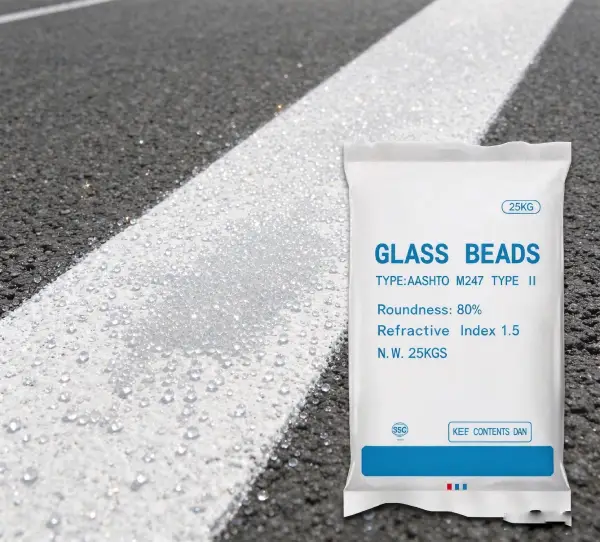
Product Overview
What Are Glass Beads for Road Marking?
Glass beads are small, transparent spherical particles used in road marking systems to provide retroreflectivity and improve the visibility of pavement markings under vehicle headlights.
When glass beads are embedded in or applied onto a road marking material, part of the incoming light is refracted and returned toward its source. This retroreflective effect helps drivers see road lines, lane boundaries and traffic symbols more clearly at night.
The performance of a glass bead system depends on factors such as bead quality, particle size distribution, refractive index, surface condition, coating, application method and the road marking material used.
Night Visibility
Helps road markings remain visible under vehicle headlights.
Retroreflectivity
Returns part of the incoming light toward the driver.
Road Safety
Supports clearer lane guidance and traffic delineation.
Multiple Applications
Used with different road marking materials and systems.
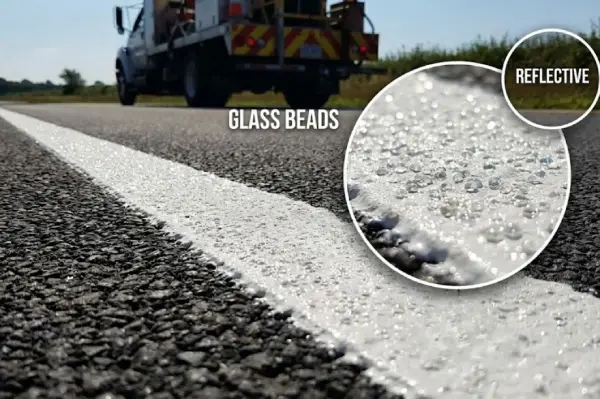
Working Principle
How Do Reflective Glass Beads Work?
Glass beads improve road marking visibility through a retroreflection process. When vehicle headlights reach the exposed glass beads, light enters the spherical particles, changes direction and is returned toward the light source.
The actual retroreflective performance depends on bead properties, how deeply the beads are embedded, the road marking material and the condition of the finished marking.
- Light enters the exposed glass bead.
- The spherical glass surface refracts the incoming light.
- Light is returned toward the direction of the source.
- The road marking becomes more visible to approaching drivers.
Product Types
Types of Glass Beads for Road Marking
Road marking glass beads can be classified by application method, refractive properties and surface treatment. These classifications describe different product characteristics and are not necessarily mutually exclusive.
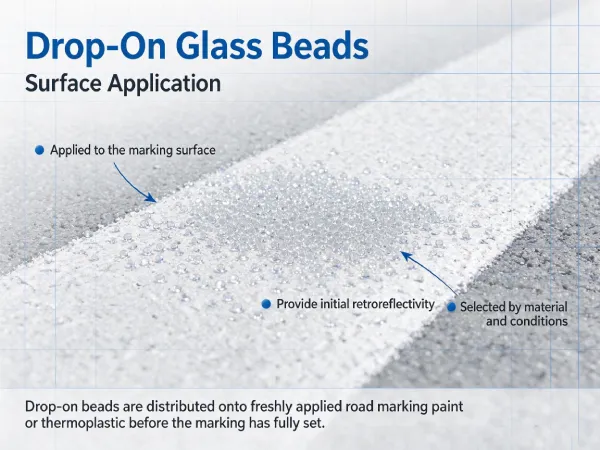
Surface Application
Drop-On Glass Beads
Drop-on glass beads are distributed onto freshly applied road marking paint or thermoplastic material before the marking has fully set.
- Applied to the marking surface
- Used to provide initial retroreflectivity
- Selected according to material and application conditions
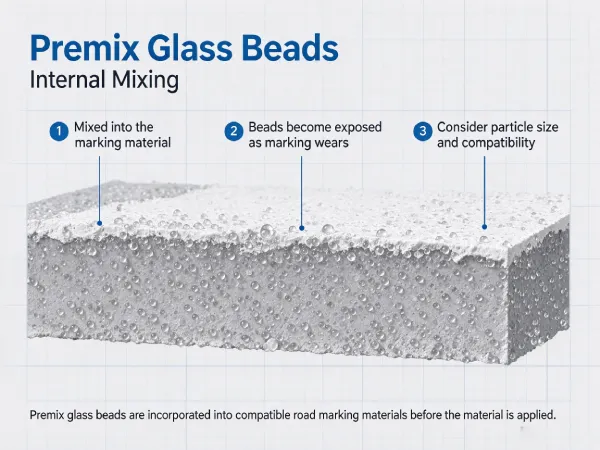
Internal Mixing
Premix Glass Beads
Premix glass beads are incorporated into compatible road marking materials during production or preparation before the material is applied.
- Mixed into the marking material
- Beads can become exposed as the marking wears
- Particle size and compatibility need to be considered

Performance Grade
High Refractive Index Glass Beads
These products are designed with a higher refractive index for road marking systems with specific retroreflective performance requirements.
- Selected by refractive index requirements
- Used where project specifications require them
- Actual performance should be verified by test data
Surface Treatment
Coated Reflective Glass Beads for Road Marking
Coated glass beads have a treated surface designed to improve their interaction with particular road marking materials or application conditions. The coating type should be selected according to the required performance and compatibility with the marking system.
Coated glass beads are especially relevant when project specifications call for moisture-resistant or adhesion-promoting surface treatment.
- Moisture-resistant coating options
- Adhesion-promoting coating options
- Product selection based on the marking material
- Technical confirmation based on supplier documentation

Moisture-Resistant Coated Glass Beads
Surface treatment designed to help protect the beads from moisture-related handling or storage issues. Suitability depends on the coating formulation and product specification.
Adhesion-Coated Glass Beads
Surface treatment designed to improve bonding between glass beads and compatible road marking materials. The coating should be matched to the binder or marking system.
Product selection note: Drop-on and premix describe how glass beads are used. Coated describes a surface-treatment characteristic. A coated product may also be designed for a particular application method or project specification.
Application Methods
Drop-On vs. Premix Glass Beads
The two main application methods serve different functions in a road marking system.
DROP-ON APPLICATION
Surface Application
Glass beads are applied onto the surface of freshly laid road marking material. The beads need to become embedded to a suitable depth so that enough of each bead remains exposed to receive and return light.
- Applied after the marking material is laid
- Commonly used with thermoplastic and road marking paint
- Application rate and timing depend on the material and project requirements
PREMIX APPLICATION
Internal Mixing
Glass beads are mixed into a compatible road marking material before application. As the marking surface gradually wears, some embedded beads may become exposed.
- Mixed into the marking material before application
- Used in compatible paint and thermoplastic systems
- Mixing ratio and bead grade depend on the material formulation
Drop-on and premix beads can be used together in some road marking systems. The appropriate combination depends on the marking material, required retroreflectivity and applicable project specification.
Applications
Applications of Reflective Glass Beads
Reflective glass beads are used in road marking systems for different transportation and infrastructure environments.
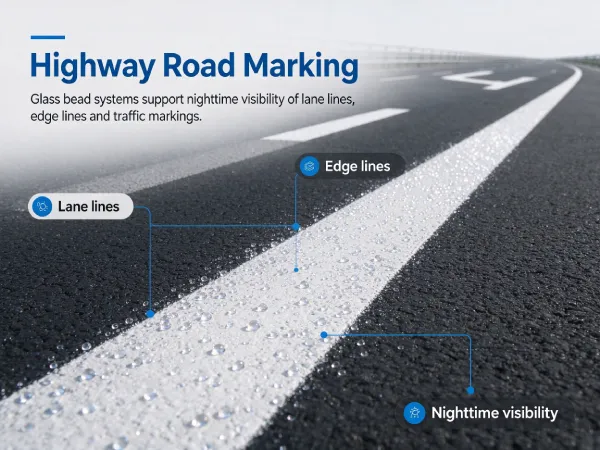
Highway Road Marking
Glass bead systems are used on highways and expressways to support the nighttime visibility of lane lines, edge lines and traffic markings.
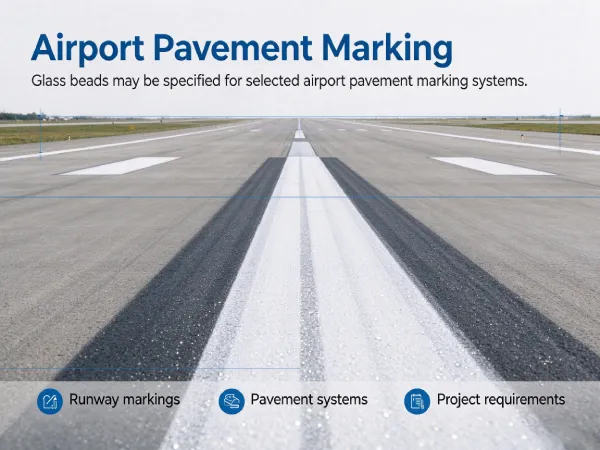
Airport Pavement Marking
Glass beads may be specified for selected airport pavement marking systems according to the relevant aviation and project requirements.

Parking Lot Marking
Used in parking facilities, commercial properties and industrial areas to improve the visibility of traffic lines and directional markings.

Urban Road Marking
Used in city streets, intersections, pedestrian crossings and municipal road maintenance projects.
Material Compatibility
Glass Beads for Different Road Marking Materials
Glass bead selection should take into account the binder, application process and performance requirements of the road marking material.
Thermoplastic Road Marking Paint
Drop-on and premix beads are used in compatible thermoplastic marking systems.
Explore Thermoplastic Paint →Cold Road Marking Paint
Drop-on glass beads can be applied to suitable freshly painted road markings.
Explore Cold Road Marking Paint →Two-Component Road Marking Material
Glass bead selection depends on the formulation and application requirements of the two-component system.
Explore Two-Component Materials →Road Marking Machines
Some marking machines include bead dispensers for applying drop-on glass beads during marking operations.
Explore Road Marking Machines →
Technical Data
Glass Beads for Road Marking Specifications
Technical requirements vary according to bead type, application method, national standards and individual project specifications.
| Parameter | What to Confirm | Why It Matters |
|---|---|---|
| Particle Size | Specified sieve grading and particle size distribution | Influences bead embedment and suitability for the application method. |
| Refractive Index | Measured refractive index stated in the product technical data | Affects the optical performance of the glass bead system. |
| Roundness | Sphericity or roundness requirement and test method | Particle shape is relevant to optical performance and product quality. |
| Surface Coating | Uncoated, moisture-resistant or adhesion-promoting treatment | Determines compatibility with the marking material and application conditions. |
| Appearance | Transparency, color, cleanliness and visible defects | Helps assess product consistency and quality. |
| Application Type | Drop-on, premix or a specified combination | Ensures the bead product matches the intended road marking process. |
| Applicable Standard | Project specification and relevant national or international standard | Provides the acceptance criteria for the supplied product. |
Important: The table above is a purchasing checklist, not a declaration of fixed product values. Actual particle size, refractive index, roundness, coating and test results should be confirmed using the selected product's technical data sheet (TDS), certificate of analysis (COA) and applicable project requirements.

Standards & Quality
Road Marking Glass Beads Standards
Different standards apply to glass beads depending on how they are used in road marking materials.
EN 1423 addresses drop-on materials for road marking, including glass beads, anti-skid aggregates and mixtures. It is relevant when evaluating materials applied to the surface of road markings.
EN 1424 relates to premix glass beads used in road marking materials. It should be considered when selecting beads incorporated into the marking material.
Other markets may use national standards or project-specific specifications. For example, South African road marking tenders may specify requirements such as Class A glass beads, coating characteristics, particle size and relevant local or EN standards.
- Confirm the exact standard and edition required by the buyer.
- Check whether the specification is for drop-on or premix beads.
- Confirm the required coating and particle size distribution.
- Request supporting test reports before placing an order.
EN 1423 and EN 1424 address different application categories. Do not assume that compliance with one standard automatically covers every type of glass bead or road marking application.
Purchasing Information
Glass Beads for Road Marking Price
The price of reflective glass beads depends on the product specification, order quantity, packaging and delivery destination.
What Affects the Price of Road Marking Glass Beads?
Standard glass beads, high refractive index beads and coated glass beads may have different prices because of their raw materials, processing requirements and technical properties. A suitable quotation should be based on the buyer's actual specification rather than a general price per ton.
Product Grade
Particle Size
Refractive Index
Surface Coating
Order Quantity
Packaging Type
Destination Port
Shipping Terms
Required Documents
For buyers searching for glass beads for road marking price in the Philippines or Pakistan, the most useful quotation information includes the required grade, quantity, destination port and preferred delivery terms.
Buyer Guide
How to Choose the Right Road Marking Glass Beads
Before purchasing, compare the technical specification with the intended road marking material and project requirements.
1
Identify the Application Method
Confirm whether you need drop-on beads for surface application, premix beads for internal mixing, or both.
2
Confirm the Technical Grade
Check particle size distribution, refractive index, roundness and other properties required by your project.
3
Check the Coating Requirement
Determine whether uncoated, moisture-resistant or adhesion-coated glass beads are required.
4
Check the Applicable Standard
Provide the required EN, national or project-specific standard and confirm the relevant test documentation.
5
Compare Supplier Documents
Review the technical data sheet, certificate of analysis, sample information and quality inspection records.
6
Confirm Delivery Details
Specify the order quantity, packaging requirements, destination port and preferred shipping terms.
International Supply
Where to Buy Glass Beads for Road Marking?
Road marking contractors, material distributors and infrastructure suppliers can source glass beads from manufacturers and international suppliers. When comparing suppliers, buyers should evaluate product specifications, coating options, quality documentation, order quantity and export experience.
For buyers searching for glass beads for road marking manufacturers in India or suppliers in other markets, it is important to compare the actual product specification rather than relying on the supplier's location or product name alone.
Wayke Machine can discuss road marking glass bead requirements for international projects. Buyers can provide their required grade, standard, quantity and destination to check suitable supply options.
- Product specification and technical documents
- Drop-on, premix and coated product requirements
- Bulk order and packaging arrangements
- Destination port and delivery requirements
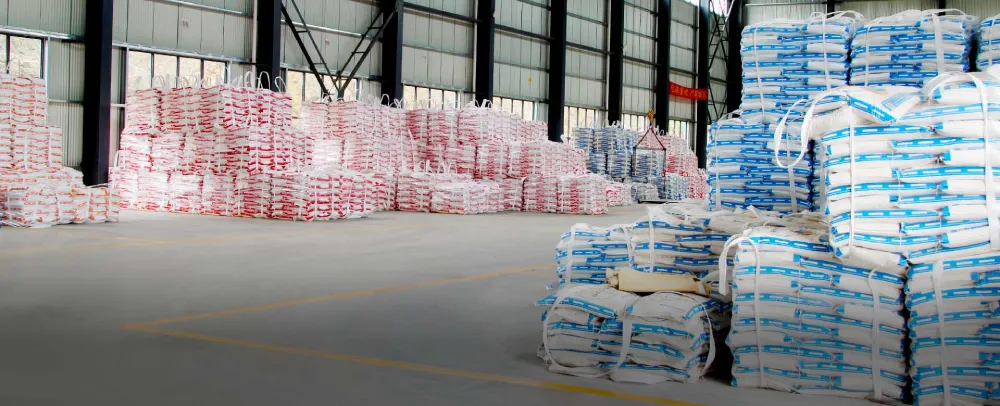
Wayke Machine
Road Marking Materials and Equipment Solutions
Glass beads are one part of a complete road marking system. Material selection and application equipment should work together to meet project requirements.
Reflective Glass Beads
Drop-on, premix and coated glass bead options for road marking applications.
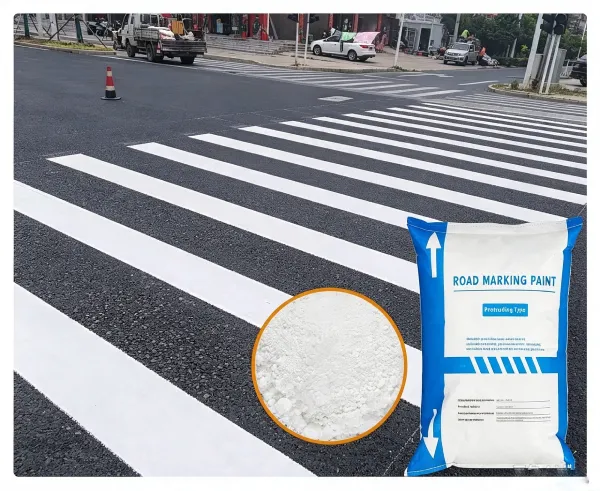
Road Marking Materials
Thermoplastic paint, cold road marking paint and two-component marking materials.

Road Marking Equipment
Road marking machines and related equipment for material application and bead dispensing.
FAQ
Frequently Asked Questions About Glass Beads for Road Marking
Answers to common questions about glass bead types, specifications, prices and purchasing.
Glass beads are used in road marking systems to provide retroreflectivity. They help return vehicle headlight illumination toward drivers, making road markings more visible at night.
Drop-on glass beads are applied to the surface of freshly laid road marking material. Premix glass beads are mixed into compatible paint or thermoplastic material before application. The two methods serve different functions and may be used together in some systems.
Coated glass beads have a treated surface. Depending on the product, the coating may be designed to improve moisture resistance or adhesion with compatible road marking materials. The required coating should be confirmed from the project specification.
There is no single particle size suitable for every road marking application. The required grading depends on whether the beads are used for drop-on or premix application and on the applicable standard or project specification. Buyers should confirm the sieve grading before ordering.
The main difference is the refractive index of the glass material. Higher refractive index products may be specified for particular retroreflective performance requirements. The correct grade should be selected according to project test requirements rather than assuming one grade is suitable for every highway or airport.
Yes. Glass beads are commonly used in thermoplastic road marking systems. Drop-on beads can be applied to the fresh marking surface, while compatible premix beads can be incorporated into the thermoplastic material. The product grade and application conditions should follow the relevant specification.
The price depends on product grade, particle size, refractive index, coating, order quantity, packaging and destination. For an accurate quotation, provide the required specification, quantity and delivery port.
Buyers should provide the required product type, particle size, refractive index, coating requirements, quantity, destination port and preferred shipping terms. Any local standard or tender specification should also be shared for review.
Compare the technical data sheet, test reports, particle size distribution, refractive index, roundness, coating, packaging and actual supply capability. A supplier's product documentation should match the requirements of the road marking project.
Glass beads are commonly classified under HS heading 7018.20 in many tariff systems. The full national tariff code may vary by country. Importers should confirm the correct classification with their customs broker or local customs authority.
Class A is a classification used in certain road marking specifications. The exact requirements depend on the relevant national standard or tender document. Buyers should confirm particle size, coating, shape, test requirements and applicable standard before ordering.
Depending on the product and project, buyers may request a technical data sheet (TDS), certificate of analysis (COA), safety data sheet (SDS/MSDS), test reports and relevant quality documentation. Required documents should be confirmed before placing the order.
Looking for Reflective Glass Beads for Road Marking?
Send us your required glass bead type, technical specification, order quantity and destination. Wayke Machine can discuss suitable product options, technical documents and international delivery arrangements for your project.